


Best Electric Fence Energiser in Australia: Find Your Fit
Date Posted: 5 October 2026
Compare solar, mains and battery electric fence energisers at The Grit. Understand joule and distance ratings to choose an option for your property.
The best electric fence energiser for an Australian property is one that suits the fence you actually run: its layout, the animals you need to contain, the condition of the ground and the power available nearby. A big kilometre rating can catch your eye, but it is only one part of the decision.
Here are three options from The Grit's range worth considering for different setups, followed by the checks that will help you narrow them down.
Three electric fence energisers to consider
For a smaller setup away from mains power: Thunderbird S-35B
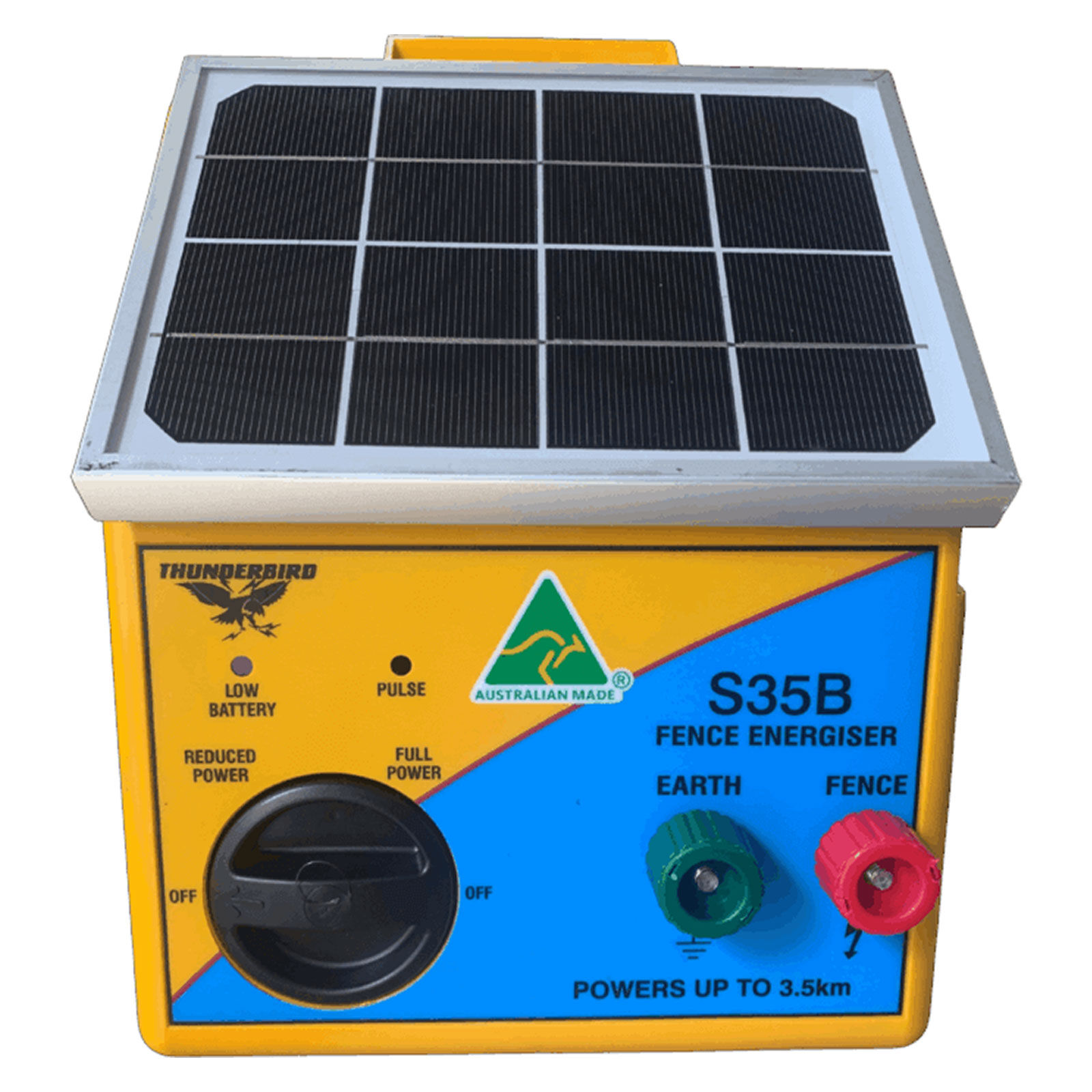 The Thunderbird S-35B solar energiser is a compact option for strip grazing or a smaller fence where a mains connection is inconvenient. It combines solar charging with an internal 3.2V lithium battery, so you do not need to assemble a separate external battery and solar panel system.
Its advertised range is up to 3.5km of fence wire, and the listing gives 0.30J of stored energy. It offers full and reduced power settings, plus a battery preservation mode that reduces the pulse rate when the charge is low.
Consider this model when portability and an integrated solar setup matter. Before choosing it, check that its capacity suits your fence and that the panel can receive enough sunlight. Solar charging still needs a suitable position and regular checks.
For a smaller fence with mains or external battery power: Nemtek Agri 5
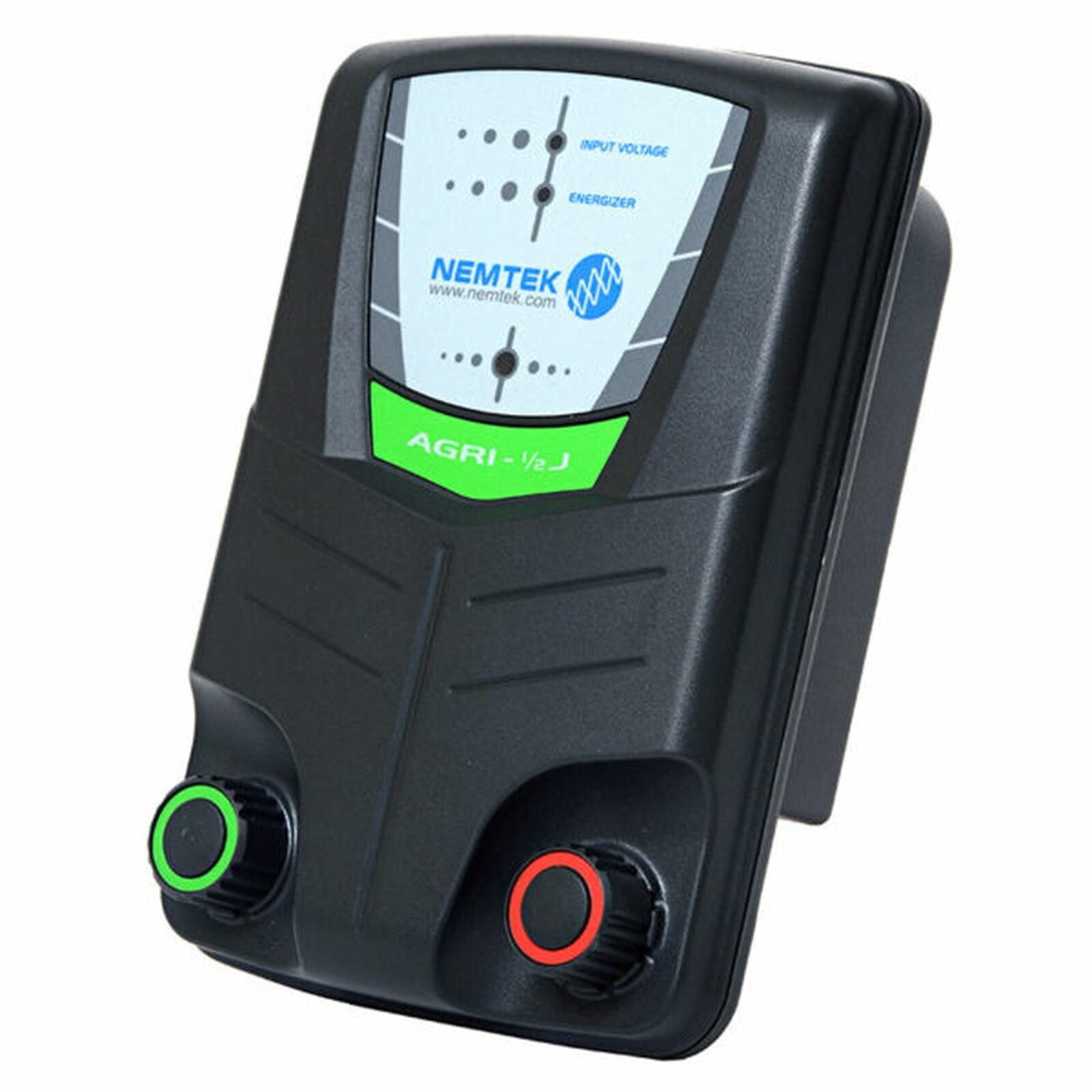 The Nemtek Agri 5 energiser is worth a look if you want the choice of mains power or a separate 12V battery. Its mains power adaptor is included; the battery is sold separately.
Nemtek lists a maximum output energy of 0.5J and stored energy of 0.8J. The advertised 5km range is for optimal conditions. Battery charge and overload indicators help you keep an eye on the system, while an optional LCD programmer provides additional adjustments.
This is a different buying proposition from an integrated solar unit. You can use the included adaptor where mains power is available, or plan an external battery setup where it is not. Allow for battery charging and any additional equipment rather than treating the energiser price as the full installation cost.
For a larger fence to assess: Nemtek Agri 50
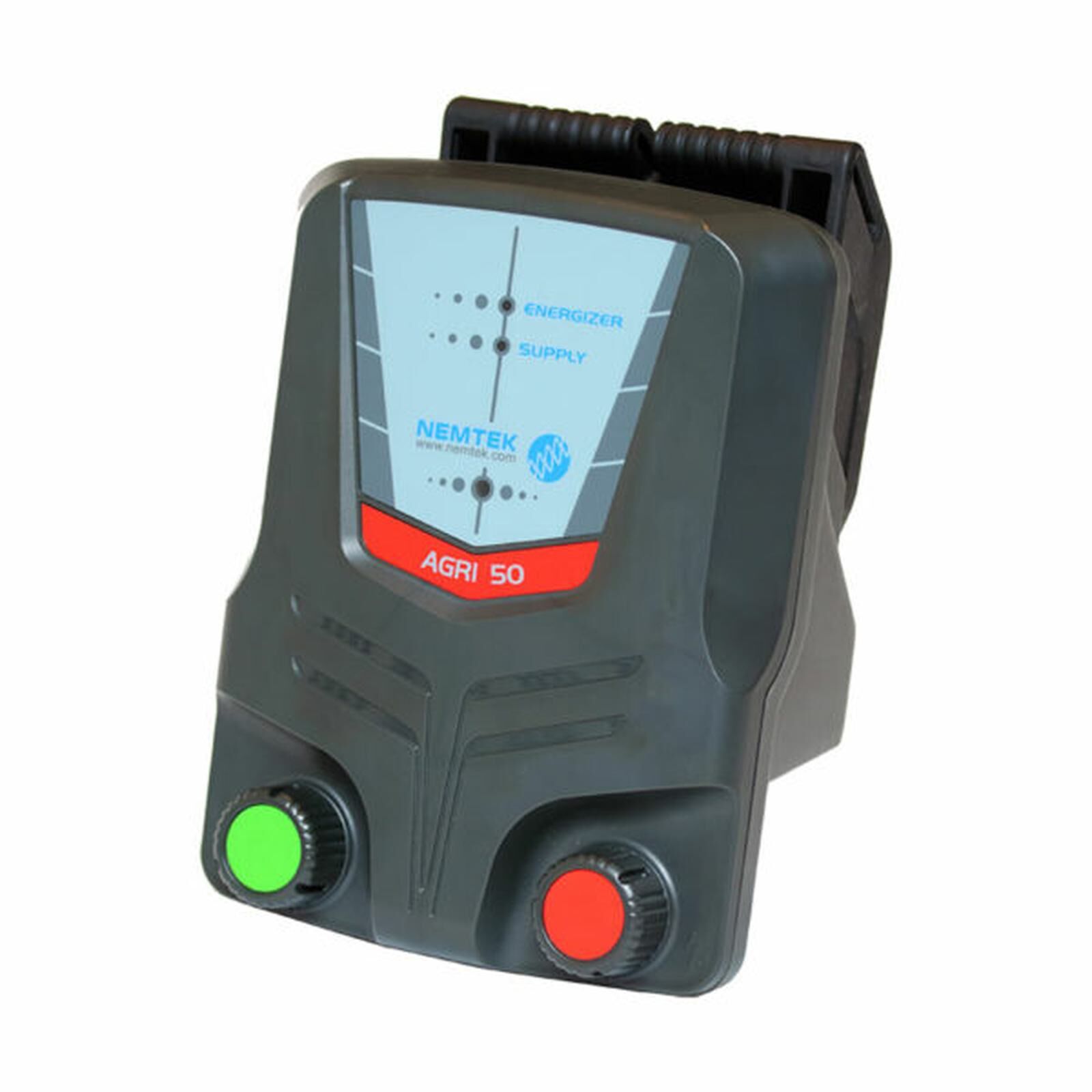 The Nemtek Agri 50 energiser is an option to assess when a small unit will not meet the demands of your fence. Its listed maximum output energy is 4.5J, with 6.5J stored energy, and its advertised range is up to 50km under optimal conditions.
It runs from an external battery or the included mains power adaptor, with the battery sold separately. Nemtek's Adaptive Power Technology responds to changes in fence conditions, and the unit has battery charge and overload indicators.
Choose its capacity around your planned installation rather than buying it solely for the larger number. Follow Nemtek's current installation instructions, including its advice to mount this model in a sheltered location, enclosure or indoor environment.
How to compare the ratings
Check which joule figure you are reading
Stored energy and output energy are different measurements. Stored energy describes energy held inside the energiser; output energy describes energy available at its terminals under a specified load. Some energy is lost within the unit.
That means the S-35B's 0.30J stored rating cannot be compared directly with the Agri 5's 0.5J output rating. Look for the same measurement when comparing models, and check voltage figures under equivalent test loads too.
Treat distance ratings as a guide
An advertised kilometre figure is not a guarantee for every fence. Thunderbird notes that wire thickness, earth conditions, underground lead lengths and proximity to other conductors can affect the effective distance.
Describe the whole installation when asking for advice: fence runs, live strands, wire or tape type, vegetation and any electric netting. A single paddock perimeter measurement does not explain all of those demands. Ask how the manufacturer's rating applies to your layout.
Before you settle on a model
- Match the power source to the location. Consider mains access, battery charging and an unshaded position for a solar panel.
- Plan for your animals and fence type. Confirm suitability for the livestock and any netting you intend to use, including its manufacturer's energiser requirements.
- Check the earth system. Dry ground can make earthing more difficult. Follow the manufacturer's design and testing instructions for your conditions.
- Include maintenance. Vegetation, damaged insulation and poor connections can cause faults. More energiser capacity does not remove the need to maintain the fence.
For installation, follow the current model manual. Thunderbird's safety guidance specifies one energiser per fence and says barbed wire must not be electrified. Check warning signage and other requirements for your site before putting the fence into service.
Find the right fit for your property
Start with the S-35B if you are assessing a compact solar setup, the Agri 5 for a smaller mains or battery installation, or the Agri 50 when you need to investigate more capacity. Each is a starting point for matching a model to your fence.
Browse our electric fence energiser range or contact The Grit with your fence layout, livestock, power source and ground conditions. For an introduction to the different power types, see our guide to choosing an energiser.