


Best Rust Converter in Australia: How They Work & Top Picks for 2026
Date Posted: 4 November 2026
Discover the best rust converters in Australia for utes, trailers, and steel machinery. Compare Pacer P15, Chemtech Fertan, rust removers, and cold gal sprays.
Rust is an unavoidable reality for Aussie utes, trailers, farm machinery, and outdoor steel structures. Whether you are dealing with salt spray along the coast, red dust across the outback, or high humidity in the shed, ferrous metals start oxidising the moment protective coatings crack or scratch. When surface rust takes hold, grabbing an angle grinder and grinding down to bare, sparkling metal is not always practical or desirable—especially in hard-to-reach crevices, box sections, welded seams, or vehicle underbodies where grinding weakens thin panels.
That is where chemical rust treatments come in. The search for the best rust converter in Australia usually comes down to finding a product that effectively neutralises active iron oxide, seals the metal against moisture, and provides a durable base for long-lasting paint without peeling. But choosing the right product requires understanding how rust converters actually work, how they differ from chemical rust removers, and how to prep the steel so the treatment never fails.
How Rust Converters Actually Work
 A rust converter is not a magic eraser that makes corrosion vanish into thin air. Instead, it relies on a chemical reaction to transform unstable iron oxide (rust) into an inert, protective mineral barrier that halts further corrosion. Most professional chemical converters in Australia use water-based tannic acid formulations, often combined with an organic polymer or phosphoric acid blend.
When applied to a rusted surface, the active ingredients react with iron oxides to form ferric tannate—a tough, insoluble, bluish-black organometallic compound. The polymer component simultaneously forms a protective seal that locks out the moisture and oxygen required for rust to propagate. Once fully reacted and cured, the surface is no longer powdery or corroding; it is chemically pacified, sealed, and ready to accept primers or topcoats.
Because rust converters require iron oxide to trigger this reaction, they should never be applied to bright, bare, unrusted steel. If there is no rust present to react with the tannic acid, the chemical simply dries as an unbonded residue that can cause subsequent paint layers to bubble and flake off. For bare steel or light oxidation where you want complete removal back to shiny metal, an acid-based deoxidiser or rust remover is the appropriate solution.
Top Rust Converters & Metal Treatments in Australia
Different restoration, automotive, and maintenance jobs call for slightly different chemical solutions. Here is a breakdown of the leading formulations available from The Grit's rust prevention range and where each one performs best.
1. Pacer P15 Rust Converter & Primer: The Versatile All-in-One Solution
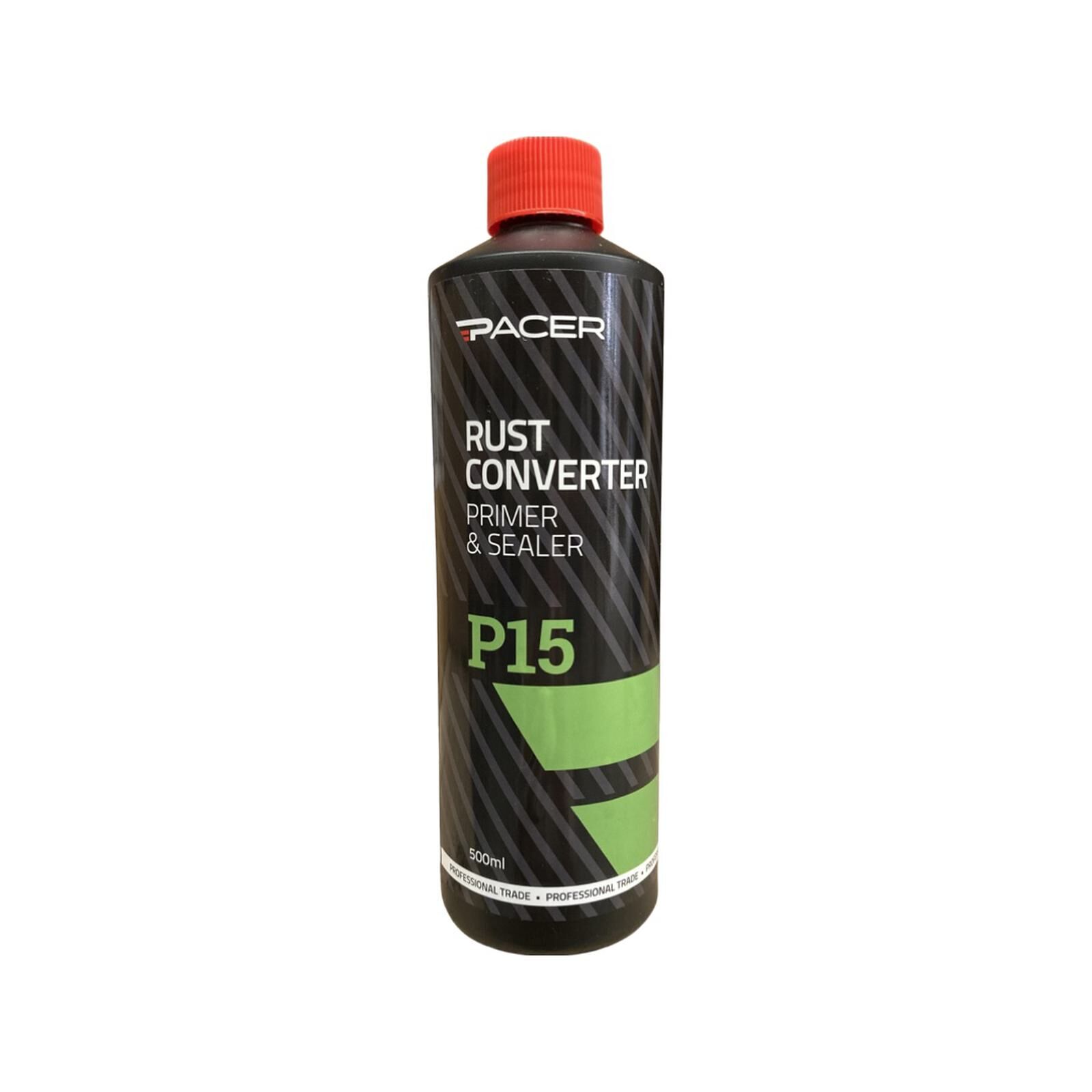
For DIY restorations, chassis work, ute trays, and general steel repairs, Pacer P15 Rust Converter & Primer is one of the most practical and reliable formulations on the Australian market. P15 combines a fast-acting tannic conversion agent with an integrated primer and sealer in a single water-based formula. As it reacts with the rust, it turns the surface into a durable, dark black inert barrier that acts directly as a primer coat.
This dual-action formula means you don't need a separate metal etch primer before putting down your finishing paint. Once Pacer P15 has cured—typically within 3 to 24 hours depending on ambient temperature and humidity—you can paint straight over it with automotive acrylics, heavy-duty enamels, or two-pack (2K) paint systems. Pacer P15 is available in sizes to suit any job, from a handy 500mL bottle (RC500) for spot repairs to a 1-litre workshop bottle (RC1) and a 5-litre bulk container (RC5) for large trailers, tractor implements, and fencing.
2. Chemtech Fertan Rust Converter: Deep-Penetrating Protection for Enclosed Spaces
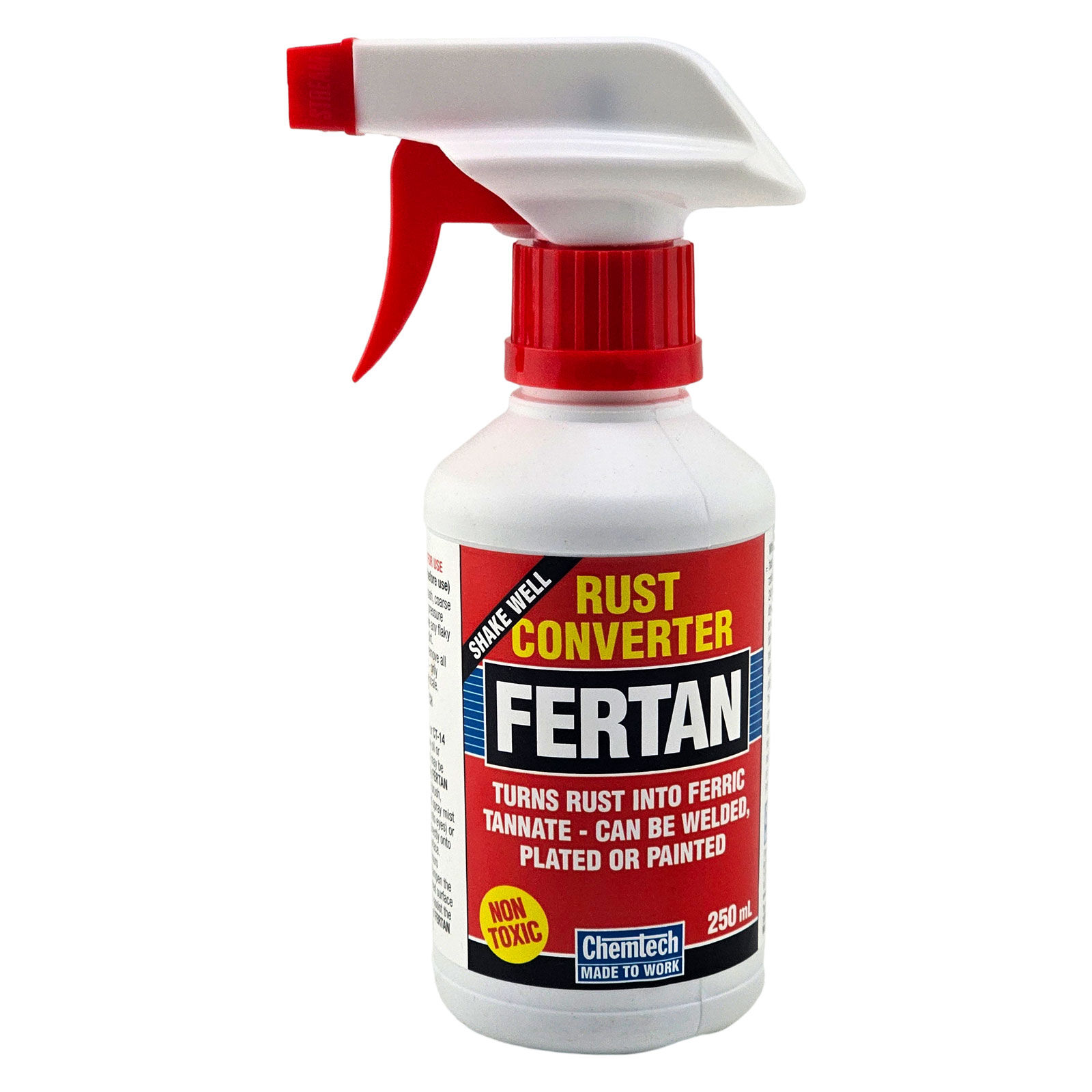 When you are treating hollow structural sections, enclosed box chassis rails, sills, or heavily pitted steel where you cannot scrub or prime easily, Chemtech Fertan Rust Converter is the benchmark choice. Originally developed and proven in European classic vehicle restorations, Fertan is a water-based, non-toxic, non-flammable liquid that penetrates deep into rust fissures and microscopic pores.
Fertan converts iron oxide into a stable ferric tannate layer and deposits a zinc-based microscopic barrier. One unique advantage of Fertan is its flexible overcoating window: once applied and allowed to react for 24 to 48 hours, it protects bare treated metal from atmospheric flash rust for up to six months before topcoating. Available in a practical 250mL trigger spray pack (FER-250M) or bulk pack (FER_P), it can be sprayed directly into hard-to-reach vehicle cavities.
Important application note: Because Fertan does not leave a built-in polymer film, it produces a loose, non-reactive black carbon dust once dry. Before applying your chosen primer or topcoat, this surface dust must be thoroughly rinsed or wiped off with water and allowed to dry.
3. Pacer P14 Rust Remover: When You Need Clean, Bare Metal
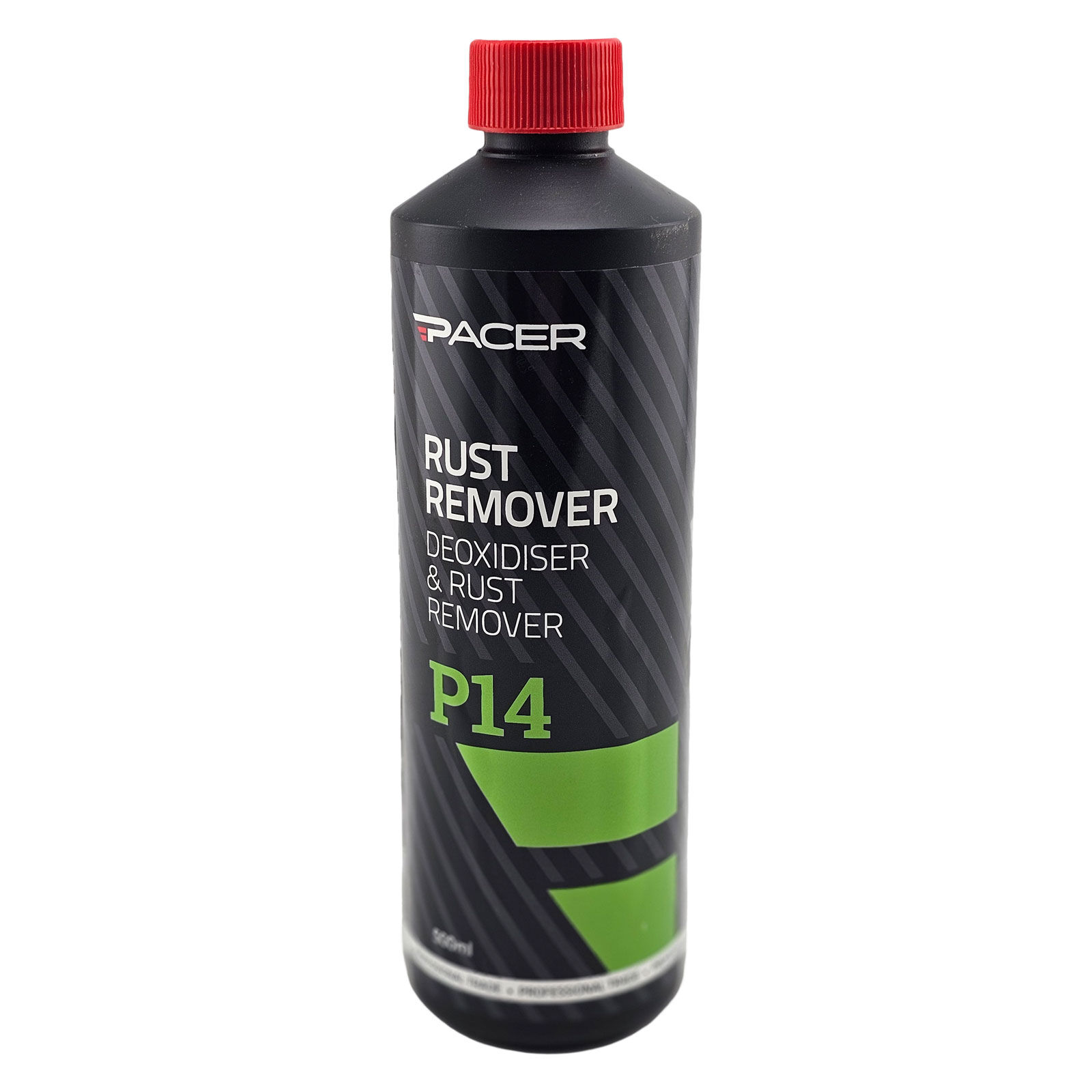 It is crucial not to confuse rust converters with rust removers. While converters leave a black ferric layer behind, Pacer P14 Deoxidiser and Rust Remover (RR500) chemically dissolves rust, corrosion, and tarnish right back to clean steel.
Pacer P14 is ideal for precision tools, hinges, bolts, unpainted steel fittings, or bodywork where you plan to apply body filler (bondo) or specialised epoxy etch primers that strictly require bare metal. Simply apply P14, allow the chemical to dissolve the oxidation, agitate with a wire brush or Scotch-Brite pad, and rinse clean. Once dry, bare metal must be primed immediately with a cold galvanising coating or etch primer to prevent flash rusting.
4. Anchor Bright Silver Gal & Cold Gal: Heavy-Duty Sacrificial Protection
 Once you have neutralised or stripped rust, the exposed metal needs long-term barrier protection against Australian weather. For fabricated steel, gate frames, trailer repairs, and weld joins, zinc-rich coatings provide sacrificial galvanic protection.
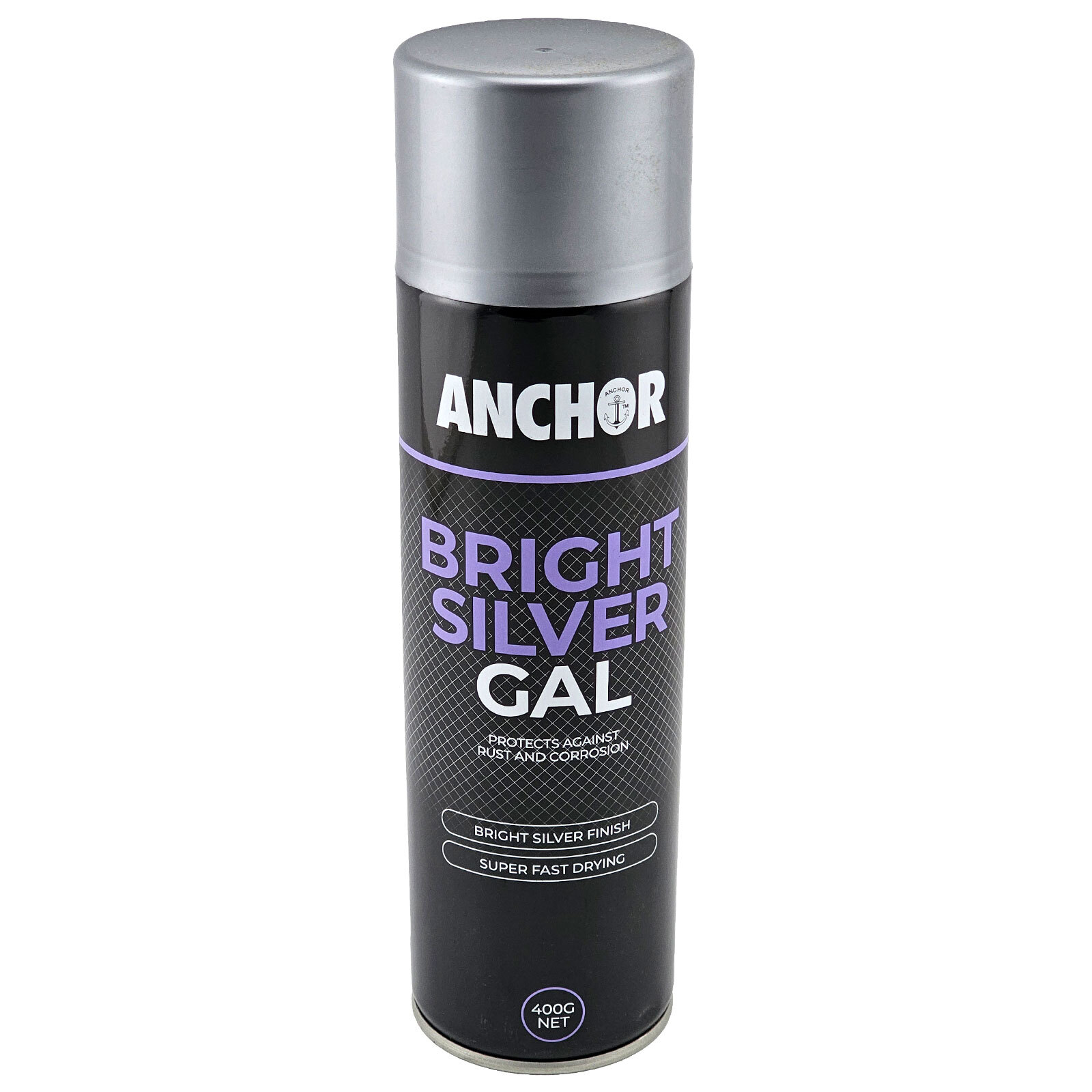
Products like Anchor 400g Bright Silver Gal (BSG400) and Anchor Shield Cold Galvanising Paint contain high concentrations of zinc dust. When moisture attacks the coating, the zinc sacrifices itself electrolytically, preventing the steel underneath from corroding. Bright Silver Gal is heat resistant to 300°C and provides an exact colour match to newly hot-dipped galvanised steel, making it ideal for blending repairs seamlessly.
Rust Treatment Comparison: Finding the Right Match
| Product | Type | Best Suited For | Painting Requirements |
|---|---|---|---|
| Pacer P15 | Converter + Primer / Sealer | Ute trays, trailers, chassis, machinery, general steel | Built-in primer; topcoat directly with acrylic, enamel, or 2K after cure |
| Chemtech Fertan | Penetrating Converter | Internal box sections, sills, cavity spraying, classic cars | Requires water rinse of dust residue; 6-month painting window before topcoat |
| Pacer P14 | Chemical Rust Remover | Hand tools, nuts & bolts, hardware, bare metal prep | Dissolves rust to bare metal; must be primed immediately to avoid flash rust |
| Anchor Bright Silver Gal | Zinc Galvanising Coating | Weld seams, fresh cut steel, re-galvanising damaged steel | Acts as a durable zinc-rich topcoat or protective primer up to 300°C |
Step-by-Step: How to Apply Rust Converter for Lasting Results
Most failures blamed on rust converters are actually caused by rushed surface preparation or incorrect curing. Following this four-step routine ensures your conversion coating will never lift or bubble.
Step 1: Knock off Flaking Scale, But Leave Firm Rust
Rust converter needs rust to react with, but it cannot penetrate heavy, loose flakes or bubbling scabs. Take a wire brush, coarse sandpaper (around 80-grit), or a wire wheel to dislodge all loose, flaking corrosion, peeling old paint, and dirt. You want to leave a sound, firmly adhering rusty surface. Do not grind back to shiny bare steel.
Step 2: Degrease the Metal Completely
Oils, grease, road grime, and chain lube will prevent water-based converters from contacting the metal. Wipe down the entire repair area with a wax and grease remover, mineral turps, or methylated spirits. Allow the surface to dry completely.
Step 3: Apply the Converter Thinly and Evenly
Pour the required amount of converter into a clean plastic cup or container. Never dip your brush directly into the main bottle—introducing rust particles into the container will contaminate and trigger the remaining chemical on the shelf. Apply a thorough, even coat using a synthetic paintbrush, roller, or spray gun. Ensure the liquid penetrates into pitted pockets and welded corners.
Step 4: Allow Time to React, Inspect, and Overcoat
Within 15 to 45 minutes, you will observe the treated rust darkening to a deep purple-black. Allow the chemical reaction to proceed for the full recommended curing time (typically 24 hours at standard 20°C conditions). If using Chemtech Fertan, sponge or rinse away the powdery surface residue with clean water once fully reacted. If using Pacer P15, simply ensure the surface is clean and apply your quality topcoat or protective paint system directly over the sealed surface.
Looking for the right supplies to stop corrosion on your vehicle or workshop projects? Explore the complete collection of Australian-proven rust prevention and converter products at The Grit, with fast nationwide delivery.